The Mobile Patch Window Has Collapsed.
Mobile exploits are outpacing update cycles. If a device is compromised today, waiting for next week's update is not a viable defense.
The Mobile Patch Window Has Collapsed.
Mobile exploits are outpacing update cycles. If a device is compromised today, waiting for next week's update is not a viable defense.
The Mobile Patch Window Has Collapsed.
Mobile exploits are outpacing update cycles. If a device is compromised today, waiting for next week's update is not a viable defense.
AI Changed the Threat Timeline
AI has compressed the timeline of mobile exploitation. Vulnerabilities that once took months to discover and weaponize are now operational in days. Patch cycles can't keep up and should not be relied upon as a primary defense. By the time updates are deployed, exploitation is already underway at scale.
The iVerify Solution
iVerify provides the mobile endpoint detection and response layer that operates independently of patch status, identifying active exploitation at the OS level regardless of OS version or compliance state.
AI Changed the Threat Timeline
AI has compressed the timeline of mobile exploitation. Vulnerabilities that once took months to discover and weaponize are now operational in days. Patch cycles can't keep up and should not be relied upon as a primary defense. By the time updates are deployed, exploitation is already underway at scale.
The iVerify Solution
iVerify provides the mobile endpoint detection and response layer that operates independently of patch status, identifying active exploitation at the OS level regardless of OS version or compliance state.
The New Dynamics of Mobile Exploitation
The economics of mobile exploitation have fundamentally shifted, creating a new challenge for enterprise security teams.
Weaponization is Now Measured in Hours
AI-assisted workflows can reduce the exploit development window to mere hours. Security teams no longer have the time needed to test, approve, and deploy patches before threats are operational.
Exploits Persist on Return
A device compromised while traveling often retains persistence mechanisms that continue to pose a threat even after the employee returns to the corporate network.
Mobile Threats Are Commoditized
Exploits have moved from highly targeted operations to a "malware-as-a-service" reality for criminal groups. This drives both volume and reach, as seen with DarkSword, which was leveraged in a mass-scale watering hole attack, with the potential to compromise an estimated 270 million devices.
Exploits Target the OS
Modern exploit chains, like Coruna and DarkSword, operate at the operating system level, often without any user interaction. They are designed to execute in memory, bypass application sandboxes, and leave no file artifacts, making them invisible to traditional controls.
The New Dynamics of Mobile Exploitation
The economics of mobile exploitation have fundamentally shifted, creating a new challenge for enterprise security teams.
Weaponization is Now Measured in Hours
AI-assisted workflows can reduce the exploit development window to mere hours. Security teams no longer have the time needed to test, approve, and deploy patches before threats are operational.
Mobile Threats Are Commoditized
Exploits have moved from highly targeted operations to a "malware-as-a-service" reality for criminal groups. This drives both volume and reach, as seen with DarkSword, which was leveraged in a mass-scale watering hole attack, with the potential to compromise an estimated 270 million devices.
Exploits Target the OS
Modern exploit chains, like Coruna and DarkSword, operate at the operating system level, often without any user interaction. They are designed to execute in memory, bypass application sandboxes, and leave no file artifacts, making them invisible to traditional controls.
A Patch is Not a Guarantee
Even a fully patched, non-jailbroken device can be actively compromised. If exploitation is already underway at scale before a patch is deployed, the device integrity assessment based on OS version is insufficient as a primary defense.
Why Current Controls Miss OS-Level Exploitation
Existing mobile security solutions were designed for an older threat era. While useful for management and hygiene, they lack the depth of visibility required to detect today's OS-level threats.
MDM & UEM
Designed for: Configuration and policy enforcement (e.g., ensuring a passcode exists and apps are up to date).
Not for: Active threat detection. MDM communicates with device management APIs and cannot observe process-level behavior or OS-level activity during an attack. A fully managed device can still be compromised without triggering an alert.
Mobile Threat Defense
Designed for: Legacy threats such as malicious apps (APKs) and device rooting/jailbreaking.
Not for: Zero-click, fileless, or OS-level compromise. Modern exploits are engineered to evade the signature-based detection and jailbreak heuristics that legacy MTD tools rely on.
Containers
Designed for: Data isolation and segregating corporate data from personal data.
Not for: Platform integrity. Containerization is ineffective against kernel-level exploits that bypass the application layer entirely.
Why Current Controls Miss OS-Level Exploitation
Existing mobile security solutions were designed for an older threat era. While useful for management and hygiene, they lack the depth of visibility required to detect today's OS-level threats.
MDM & UEM
Designed for: Configuration and policy enforcement (e.g., ensuring a passcode exists and apps are up to date).
Not for: Active threat detection. MDM communicates with device management APIs and cannot observe process-level behavior or OS-level activity during an attack. A fully managed device can still be compromised without triggering an alert.
Mobile Threat Defense
Designed for: Legacy threats such as malicious apps (APKs) and device rooting/jailbreaking.
Not for: Zero-click, fileless, or OS-level compromise. Modern exploits are engineered to evade the signature-based detection and jailbreak heuristics that legacy MTD tools rely on.
Containers
Designed for: Data isolation and segregating corporate data from personal data.
Not for: Platform integrity. Containerization is ineffective against kernel-level exploits that bypass the application layer entirely.
The iVerify Solution
iVerify is the mobile endpoint detection and response layer engineered to close the visibility blind spot left by legacy controls. It is built to operate in a patch-as-a-secondary-defense environment, detecting sophisticated, OS-level compromise that bypasses traditional security and compliance checks.
Detection Independent of Patch Status
Operating at the OS level, iVerify identifies active exploitation by analyzing system-level telemetry, regardless of whether a device is fully patched or compliant.
System-Level Visibility
iVerify collects log and artifact data directly from the mobile OS, enabling analysis of process-level behavior. It's the only layer where threats like Coruna and DarkSword are visible.
Supporting BYOD Without Privacy Tradeoffs
iVerify is built with a privacy-first design. It deploys standalone or alongside your existing MDM/MAM and collects only the security telemetry required for threat detection.
The iVerify Solution
iVerify is the mobile endpoint detection and response layer engineered to close the visibility blind spot left by legacy controls. It is built to operate in a patch-as-a-secondary-defense environment, detecting sophisticated, OS-level compromise that bypasses traditional security and compliance checks.
Detection Independent of Patch Status
Operating at the OS level, iVerify identifies active exploitation by analyzing system-level telemetry, regardless of whether a device is fully patched or compliant.
System-Level Visibility
iVerify collects log and artifact data directly from the mobile OS, enabling analysis of process-level behavior. It's the only layer where threats like Coruna and DarkSword are visible.
Supporting BYOD Without Privacy Tradeoffs
iVerify is built with a privacy-first design. It deploys standalone or alongside your existing MDM/MAM and collects only the security telemetry required for threat detection.
The iVerify Solution
iVerify is the mobile endpoint detection and response layer engineered to close the visibility blind spot left by legacy controls. It is built to operate in a patch-as-a-secondary-defense environment, detecting sophisticated, OS-level compromise that bypasses traditional security and compliance checks.
Detection Independent of Patch Status
Operating at the OS level, iVerify identifies active exploitation by analyzing system-level telemetry, regardless of whether a device is fully patched or compliant.
Supporting BYOD Without Privacy Tradeoffs
iVerify is built with a privacy-first design. It deploys standalone or alongside your existing MDM/MAM and collects only the security telemetry required for threat detection.
System-Level Visibility
iVerify collects log and artifact data directly from the mobile OS, enabling analysis of process-level behavior. It's the only layer where threats like Coruna and DarkSword are visible.
Operationalizing Mobile Security into Your SOC
iVerify plugs into existing security operations, delivering OS-level mobile threat telemetry into your SIEM, SOAR, and Conditional Access platforms.
Deployment
The iVerify agent is deployed to the mobile fleet, across both corporate-owned and BYOD devices. Deployment can be done in minutes using a zero-touch, userless process via the existing MDM, or as a standalone app.
Detection
The iVerify agent continuously monitors the operating system for indicators of compromise (IOCs) and behavioral anomalies. Threat intelligence, informed by active research, is operationalized directly into the platform to detect zero-click, fileless, and exploit-based compromise.
Response
When a threat is detected, iVerify delivers a high-fidelity, evidence-backed alert. This threat telemetry is fed directly into existing SOC workflows, SIEM, SOAR, and Conditional Access platforms, allowing analysts to investigate and respond immediately.

Operationalizing Mobile Security into Your SOC
iVerify plugs into existing security operations, delivering OS-level mobile threat telemetry into your SIEM, SOAR, and Conditional Access platforms.
Deployment
The iVerify agent is deployed to the mobile fleet, across both corporate-owned and BYOD devices. Deployment can be done in minutes using a zero-touch, userless process via the existing MDM, or as a standalone app.
Detection
The iVerify agent continuously monitors the operating system for indicators of compromise (IOCs) and behavioral anomalies. Threat intelligence, informed by active research, is operationalized directly into the platform to detect zero-click, fileless, and exploit-based compromise.
Response
When a threat is detected, iVerify delivers a high-fidelity, evidence-backed alert. This threat telemetry is fed directly into existing SOC workflows, SIEM, SOAR, and Conditional Access platforms, allowing analysts to investigate and respond immediately.
Detection Beyond the Patch Cycle
The conditions that enforced exploitation scarcity are changing. Security strategies must assume exposure and rely on detection that operates independently of patch timelines.
Mobile compromise is no longer an edge case
Risk is shifting from rare to plausible. Mobile devices must now be treated as potential Tier-1 entry points into enterprise systems.
Detection is the primary gap
iOS lacks a traditional endpoint security framework, providing minimal native visibility into device-level compromise. Exploit-based attacks within legitimate processes leave limited indicators, allowing compromise to go undetected and serve as an unmonitored beachhead for lateral movement.
Patch-only strategies are insufficient
Rapid exploitation, sometimes within hours of a patch release, renders patching insufficient. With up to 25% of corporate devices unpatched, the N-day vulnerability market thrives, creating a difficult stability vs security trade-off for enterprises.

Detection Beyond the Patch Cycle
The conditions that enforced exploitation scarcity are changing. Security strategies must assume exposure and rely on detection that operates independently of patch timelines.
Mobile compromise is no longer an edge case
Risk is shifting from rare to plausible. Mobile devices must now be treated as potential Tier-1 entry points into enterprise systems.
Detection is the primary gap
iOS lacks a traditional endpoint security framework, providing minimal native visibility into device-level compromise. Exploit-based attacks within legitimate processes leave limited indicators, allowing compromise to go undetected and serve as an unmonitored beachhead for lateral movement.
Patch-only strategies are insufficient
Rapid exploitation, sometimes within hours of a patch release, renders patching insufficient. With up to 25% of corporate devices unpatched, the N-day vulnerability market thrives, creating a difficult stability vs security trade-off for enterprises.
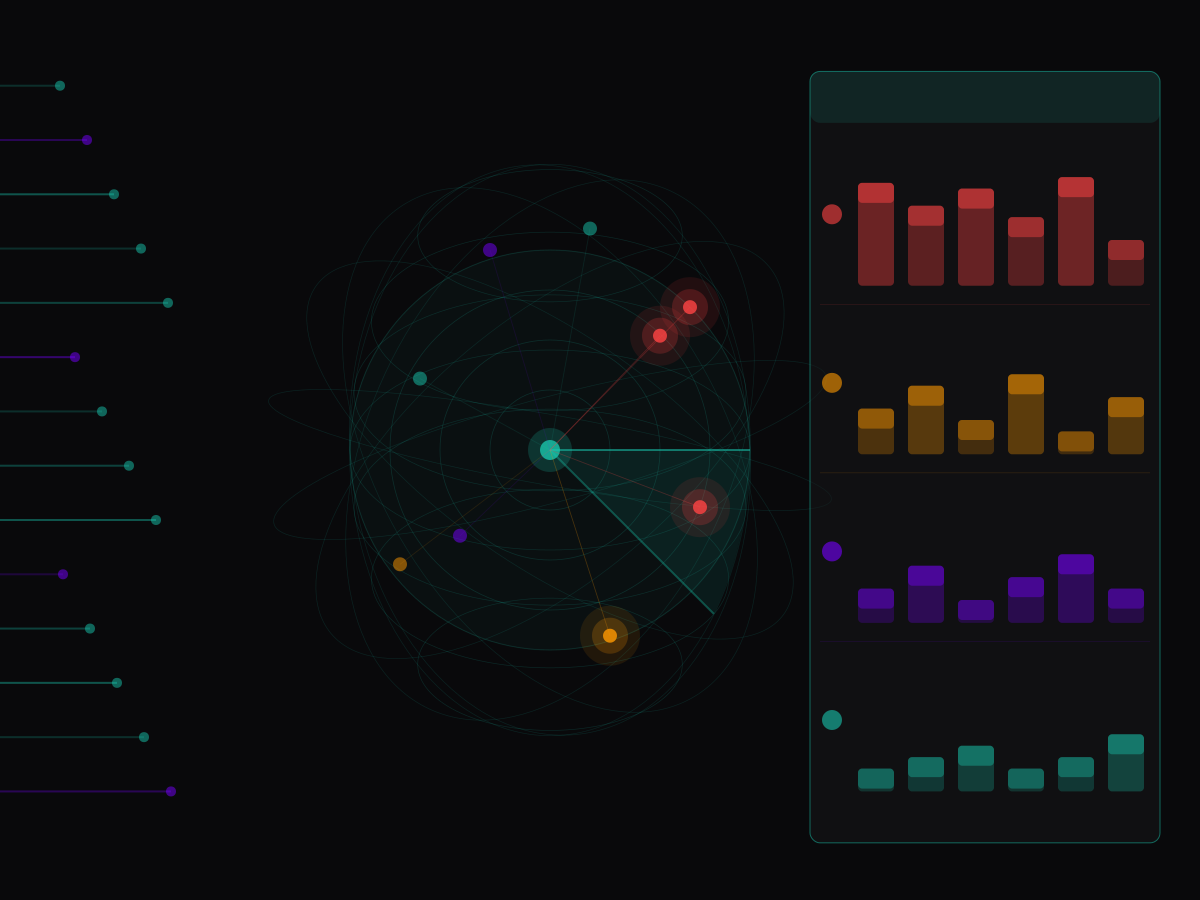
The Business Case for Mobile EDR
Extending detection to mobile translates directly into risk reduction and operational efficiency.
Risk Reduction
Move beyond compliance reporting to genuine security posture. Detect active exploitation and persistent access before damage spreads.
SOC Efficiency
Deliver mobile threat telemetry directly into existing SIEM and SOAR systems, enabling analysts to investigate mobile incidents alongside traditional endpoints.
BYOD Enablement
Secure your BYOD environment without creating employee friction or legal exposure. A privacy-first approach drives adoption and reduces the unmanaged attack surface.
Protection of Sensitive Data & Revenue
Prevent mobile-origin credential theft and zero-click exploits from being the entry point for enterprise-wide ransomware or data exfiltration that can cost millions.
The Business Case for Mobile EDR
Extending detection to mobile translates directly into risk reduction and operational efficiency.
Risk Reduction
Move beyond compliance reporting to genuine security posture. Detect active exploitation and persistent access before damage spreads.
SOC Efficiency
Deliver mobile threat telemetry directly into existing SIEM and SOAR systems, enabling analysts to investigate mobile incidents alongside traditional endpoints.
BYOD Enablement
Secure your BYOD environment without creating employee friction or legal exposure. A privacy-first approach drives adoption and reduces the unmanaged attack surface.
Protection of Sensitive Data & Revenue
Prevent mobile-origin credential theft and zero-click exploits from being the entry point for enterprise-wide ransomware or data exfiltration that can cost millions.
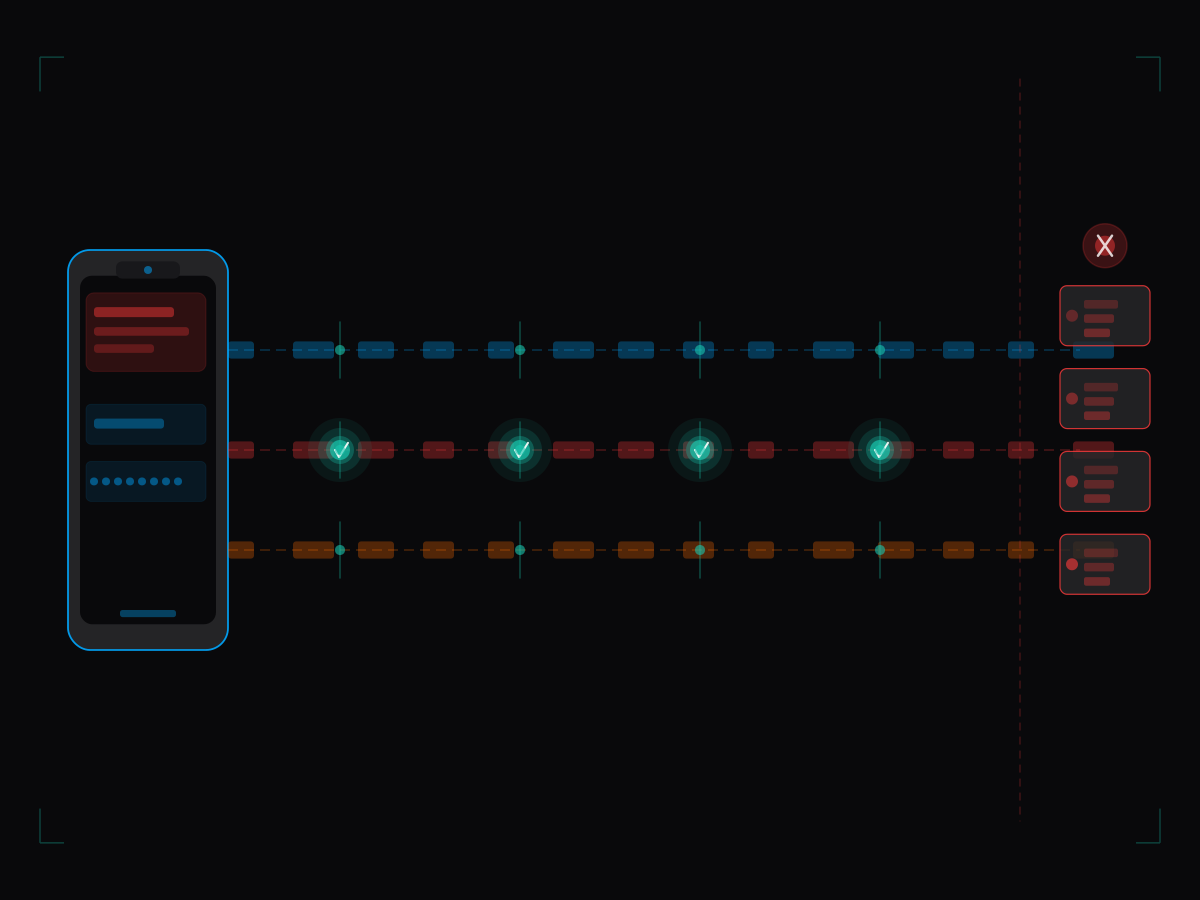
Built for Teams That Can't Afford a Mobile Blind Spot
How iVerify Secures High-Risk Travel
Mixed Device Environments
Organizations running a hybrid environment with both corporate-managed devices and a large BYOD footprint.
SOC-Driven Security Teams
Teams focused on extending EDR-style visibility to mobile and integrating mobile threat telemetry with their existing SIEM/SOAR platforms.
High-Risk Profiles
Financial Services, Government, and Technology firms targeted by sophisticated or nation-state actors.
Organizations Without Mobile Visibility
Teams who are not confident their current tools can detect zero-click exploits, spyware, or credential theft originating from mobile devices.
AI-Accelerated Exploitation FAQs
Does an Existing MDM Solution Provide Sufficient Mobile Security?
How Does iVerify Protect Employee Privacy on Personal Devices?
Is Device Management Required for iVerify Deployment?
Is Rapid Patching an Adequate Mobile Security Solution?
Move beyond patch management and implement continuous detection.
Request an Enterprise Free Trial
Move beyond patch management and implement continuous detection.
Request an Enterprise Free Trial
Move beyond patch management and implement continuous detection.
Request an Enterprise Free Trial