Bring Mobile Visibility into the SOC
SOC teams have invested heavily in endpoint and cloud visibility. Without equivalent coverage on mobile devices, a critical layer of enterprise risk remains unmonitored.
Bring Mobile Visibility into the SOC
SOC teams have invested heavily in endpoint and cloud visibility. Without equivalent coverage on mobile devices, a critical layer of enterprise risk remains unmonitored.
Bring Mobile Visibility into the SOC
SOC teams have invested heavily in endpoint and cloud visibility. Without equivalent coverage on mobile devices, a critical layer of enterprise risk remains unmonitored.
Mobile Is the SOC's Blind Spot
Security Operations Center (SOC) teams have detection and response coverage for laptops, servers, and cloud infrastructure. Mobile devices generate no telemetry, feed no alerts, and appear in no investigation workflow. When an incident involves a mobile device, analysts are working blind.
Solution
iVerify delivers OS-level telemetry from iOS and Android covered devices (including BYOD) into existing SIEM and SOAR workflows, giving analysts the mobile context they need to investigate and respond across the full attack surface, not just the endpoints they can already see.
Mobile Is the SOC's Blind Spot
Security Operations Center (SOC) teams have detection and response coverage for laptops, servers, and cloud infrastructure. Mobile devices generate no telemetry, feed no alerts, and appear in no investigation workflow. When an incident involves a mobile device, analysts are working blind.
Solution
iVerify delivers OS-level telemetry from iOS and Android covered devices (including BYOD) into existing SIEM and SOAR workflows, giving analysts the mobile context they need to investigate and respond across the full attack surface, not just the endpoints they can already see.
The Shift in Enterprise Threats the SOC Can't See
The mobile security threat landscape has fundamentally changed, creating a strategic asymmetry that sophisticated attackers actively exploit.
Mobile Is the Access Point
Mobile devices are now central to enterprise identity, carrying authentication tokens, MFA applications, and direct access to sensitive cloud systems. Any device with this level of access must be treated as a critical endpoint.
Strategic Asymmetry
Security teams apply rigorous Endpoint Detection and Response (EDR) capabilities to servers and laptops. Mobile devices, which are the primary identity surface, often receive a fraction of that security investment, leaving a significant gap.
The Primary Entry Vector
A vast majority of enterprise credential theft originates from mobile phishing and social engineering campaigns, often delivered via smishing.
AI-Accelerated Exploitation
AI is collapsing the exploit development window. Frontier AI models can build full, working exploit chains autonomously. This capability has reduced the time to develop a working exploit from weeks to hours. Rapid exploitation, sometimes within hours of a patch release, renders patching insufficient.
Exploits Operate Below the Surface
Modern exploit chains like Coruna and DarkSword inject into trusted system processes and execute in memory, producing none of the filesystem indicators or behavioral signals that MDM and legacy MTD tools are built to catch.
The Shift in Enterprise Threats the SOC Can't See
The mobile security threat landscape has fundamentally changed, creating a strategic asymmetry that sophisticated attackers actively exploit.
Mobile Is the Access Point
Mobile devices are now central to enterprise identity, carrying authentication tokens, MFA applications, and direct access to sensitive cloud systems. Any device with this level of access must be treated as a critical endpoint.
AI-Accelerated Exploitation
AI is collapsing the exploit development window. Frontier AI models can build full, working exploit chains autonomously. This capability has reduced the time to develop a working exploit from weeks to hours. Rapid exploitation, sometimes within hours of a patch release, renders patching insufficient.
Strategic Asymmetry
Security teams apply rigorous Endpoint Detection and Response (EDR) capabilities to servers and laptops. Mobile devices, which are the primary identity surface, often receive a fraction of that security investment, leaving a significant gap.
Exploits Operate Below the Surface
Modern exploit chains like Coruna and DarkSword inject into trusted system processes and execute in memory, producing none of the filesystem indicators or behavioral signals that MDM and legacy MTD tools are built to catch.
The Primary Entry Vector
A vast majority of enterprise credential theft originates from mobile phishing and social engineering campaigns, often delivered via smishing.
The Mobile Telemetry Gap in the SOC
Current mobile security solutions were often designed for compliance or a prior threat era, lacking the necessary OS-level instrumentation for modern defense.
MDM & UEM
Designed for policy enforcement, configuration control, and device wiping.
Not for providing security visibility into process-level behavior or OS-level activity during an active attack.
Mobile Threat Defense
Designed for app scanning, network inspection, and detecting older signals like jailbreaks.
Not for detecting zero-click, fileless, or behavioral exploitation that operates within trusted system processes.
The Shared Limitation
Both legacy categories operate above the OS layer and rely on indirect signals. This is insufficient for detecting sophisticated compromise, which is engineered to evade these surface-level controls.
The Mobile Telemetry Gap in the SOC
Current mobile security solutions were often designed for compliance or a prior threat era, lacking the necessary OS-level instrumentation for modern defense.
MDM & UEM
Designed for policy enforcement, configuration control, and device wiping.
Not for providing security visibility into process-level behavior or OS-level activity during an active attack.
Mobile Threat Defense
Designed for app scanning, network inspection, and detecting older signals like jailbreaks.
Not for detecting zero-click, fileless, or behavioral exploitation that operates within trusted system processes.
The Shared Limitation
Both legacy categories operate above the OS layer and rely on indirect signals. This is insufficient for detecting sophisticated compromise, which is engineered to evade these surface-level controls.
The iVerify Approach
iVerify is true Mobile Endpoint Detection and Response (Mobile EDR), built for the modern threat landscape. It treats mobile devices with the same rigor applied to any critical endpoint, focusing on enabling security teams to see and respond to real threats.
Detecting Device Compromise
iVerify shifts the focus from surface-level compliance to system-level visibility. By operating at the OS level, the platform detects exploitation and behavioral anomalies that are invisible to traditional tools.
Combining Automation with Expert Analysis
iVerify continuously collects OS log and artifact data. A dedicated research team actively hunts for novel mobile threats, such as Coruna and DarkSword, and operationalizes new detections directly into the platform.
Supporting BYOD Without Privacy Tradeoffs
The platform's privacy-first design collects no unnecessary data. This enables meaningful security visibility across the fleet without creating employee friction or legal exposure.
The iVerify Approach
iVerify is true Mobile Endpoint Detection and Response (Mobile EDR), built for the modern threat landscape. It treats mobile devices with the same rigor applied to any critical endpoint, focusing on enabling security teams to see and respond to real threats.
Detecting Device Compromise
iVerify shifts the focus from surface-level compliance to system-level visibility. By operating at the OS level, the platform detects exploitation and behavioral anomalies that are invisible to traditional tools.
Supporting BYOD Without Privacy Tradeoffs
The platform's privacy-first design collects no unnecessary data. This enables meaningful security visibility across the fleet without creating employee friction or legal exposure.
Combining Automation with Expert Analysis
iVerify continuously collects OS log and artifact data. A dedicated research team actively hunts for novel mobile threats, such as Coruna and DarkSword, and operationalizes new detections directly into the platform.
The iVerify Approach
iVerify is true Mobile Endpoint Detection and Response (Mobile EDR), built for the modern threat landscape. It treats mobile devices with the same rigor applied to any critical endpoint, focusing on enabling security teams to see and respond to real threats.
Detecting Device Compromise
iVerify shifts the focus from surface-level compliance to system-level visibility. By operating at the OS level, the platform detects exploitation and behavioral anomalies that are invisible to traditional tools.
Combining Automation with Expert Analysis
iVerify continuously collects OS log and artifact data. A dedicated research team actively hunts for novel mobile threats, such as Coruna and DarkSword, and operationalizes new detections directly into the platform.
Supporting BYOD Without Privacy Tradeoffs
The platform's privacy-first design collects no unnecessary data. This enables meaningful security visibility across the fleet without creating employee friction or legal exposure.
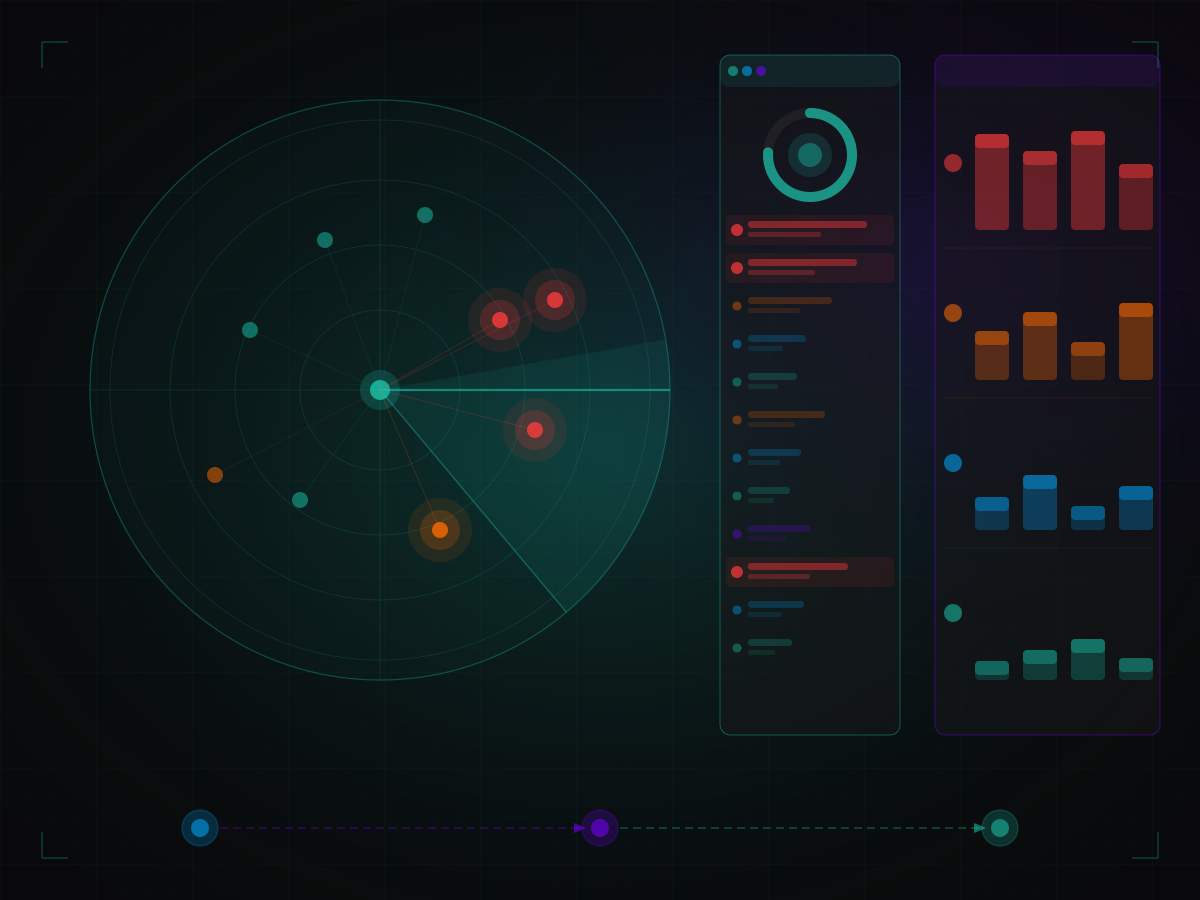
How iVerify Extends SOC Visibility to Mobile
iVerify seamlessly extends your existing SOC capabilities to the mobile endpoint in three clear steps.
Deployment
The Mobile EDR agent deploys fleet-wide across iOS and Android. It integrates directly with your existing MDM or MAM solutions, or can be deployed standalone.
Detection
iVerify continuously analyzes system-level telemetry to assess device integrity. This system-level analysis detects zero-click, fileless, and behavioral exploitation. It also covers threats across the attack chain, from smishing to SIM swap attempts.
Response
Real-time threat telemetry flows directly into your SIEM, SOAR, and XDR platforms via open APIs. This allows SOC analysts to include mobile context in investigations and trigger automated response actions that reflect the actual mobile security state.
How iVerify Extends SOC Visibility to Mobile
iVerify seamlessly extends your existing SOC capabilities to the mobile endpoint in three clear steps.
Deployment
The Mobile EDR agent deploys fleet-wide across iOS and Android. It integrates directly with your existing MDM or MAM solutions, or can be deployed standalone.
Detection
iVerify continuously analyzes system-level telemetry to assess device integrity. This system-level analysis detects zero-click, fileless, and behavioral exploitation. It also covers threats across the attack chain, from smishing to SIM swap attempts.
Response
Real-time threat telemetry flows directly into your SIEM, SOAR, and XDR platforms via open APIs. This allows SOC analysts to include mobile context in investigations and trigger automated response actions that reflect the actual mobile security state.
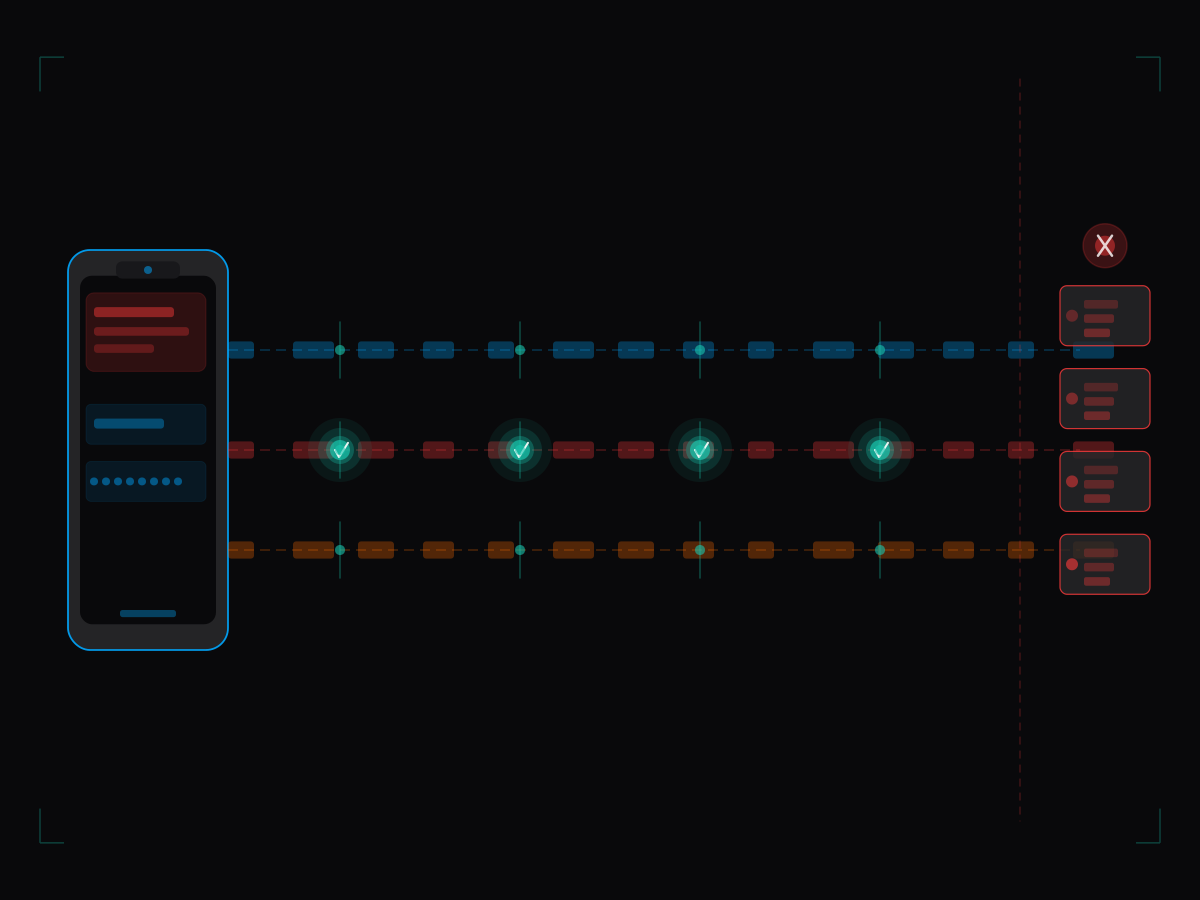
What Mobile Visibility Delivers to the SOC
Integrating mobile visibility delivers measurable business value and operational efficiency by focusing on security outcomes.
SOC Efficiency
Delivers mobile threat telemetry directly into existing SOC workflows, enabling analysts to conduct holistic investigations alongside signals from other endpoints.
Risk Reduction
Closes the strategic visibility gap that sophisticated attackers actively exploit, reducing the likelihood of a high-impact breach originating from a compromised mobile device.
BYOD Enablement
Enables secure use of personal devices for work by delivering meaningful fleet visibility with only security telemetry collected and no native access to personal content, removing the privacy and compliance barriers that stall most BYOD programs.
Protection of Sensitive Data & Revenue
Provides continuous verification of device security posture, ensuring that access decisions reflect the real security state before granting entry to critical systems and sensitive corporate data.
What Mobile Visibility Delivers to the SOC
Integrating mobile visibility delivers measurable business value and operational efficiency by focusing on security outcomes.
SOC Efficiency
Delivers mobile threat telemetry directly into existing SOC workflows, enabling analysts to conduct holistic investigations alongside signals from other endpoints.
Risk Reduction
Closes the strategic visibility gap that sophisticated attackers actively exploit, reducing the likelihood of a high-impact breach originating from a compromised mobile device.
BYOD Enablement
Enables secure use of personal devices for work by delivering meaningful fleet visibility with only security telemetry collected and no native access to personal content, removing the privacy and compliance barriers that stall most BYOD programs.
Protection of Sensitive Data & Revenue
Provides continuous verification of device security posture, ensuring that access decisions reflect the real security state before granting entry to critical systems and sensitive corporate data.
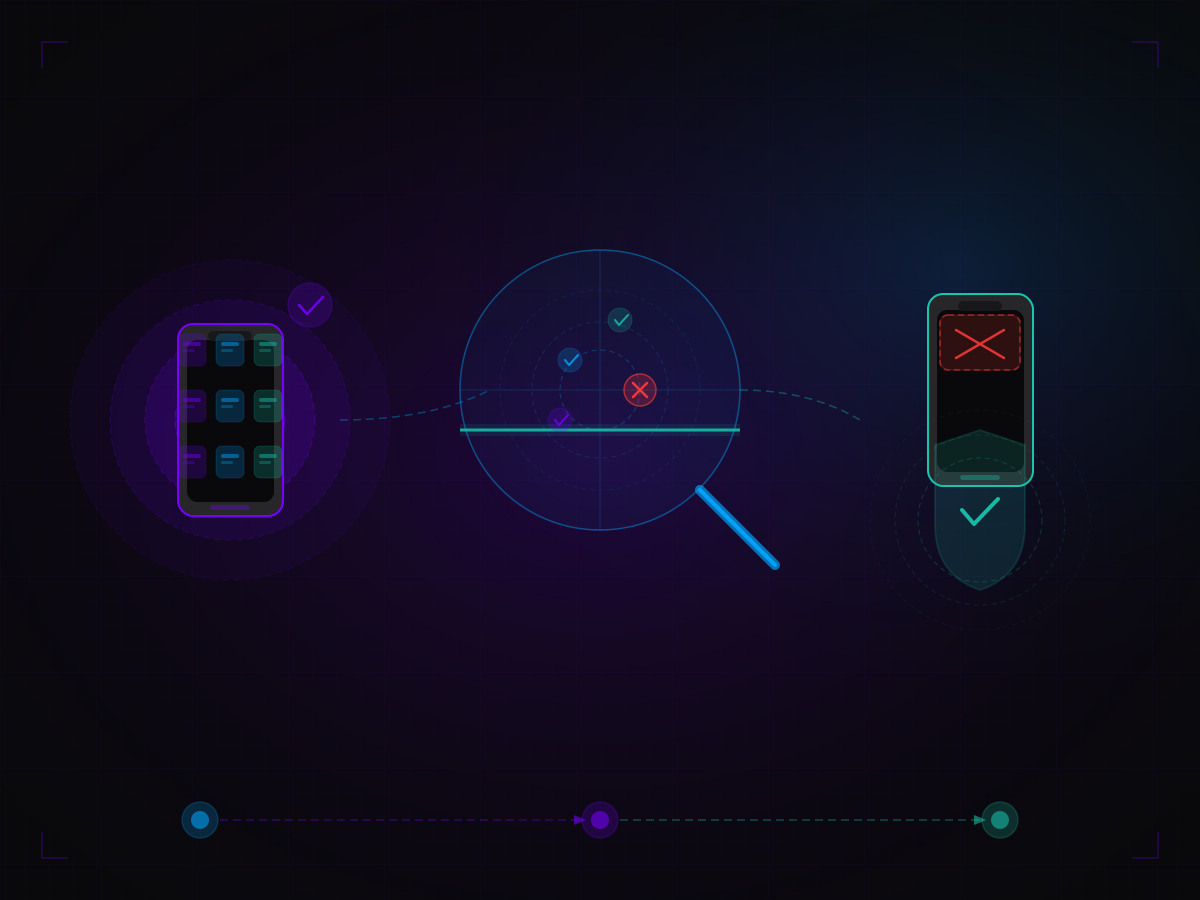
Proven Detection. Real-World Threat Coverage
Effective Mobile EDR requires high-fidelity, OS-level telemetry and continuous alignment with evolving adversary techniques.
Active Threat Research
iVerify’s dedicated research team tracks mobile exploit kits and surveillance campaigns, ensuring our detection capabilities are continuously updated as adversary techniques evolve.
High-Fidelity OS-Level Telemetry
iVerify analyzes log and artifact data directly from the mobile operating system, enabling detection of process-level behavior, exploitation indicators, and post-compromise activity that are not visible to application- or network-layer tools.
Proven Detection. Real-World Threat Coverage
Effective Mobile EDR requires high-fidelity, OS-level telemetry and continuous alignment with evolving adversary techniques.
Active Threat Research
iVerify’s dedicated research team tracks mobile exploit kits and surveillance campaigns, ensuring our detection capabilities are continuously updated as adversary techniques evolve.
High-Fidelity OS-Level Telemetry
iVerify analyzes log and artifact data directly from the mobile operating system, enabling detection of process-level behavior, exploitation indicators, and post-compromise activity that are not visible to application- or network-layer tools.
Built for Teams Closing the SOC Visibility Gap
iVerify is designed for organizations that require a unified, endpoint-level security posture that rigorously includes mobile devices.
Mature Security Operations Centers (SOCs)
Organizations that have EDR deployed across their laptop and server fleets and seek to integrate mobile telemetry for full, 360-degree coverage.
Built for High-Stakes Environments
If your organization is subject to regulatory scrutiny, holds valuable IP, or operates infrastructure others depend on, mobile is your most exposed and least monitored attack surface.
Zero Trust Initiatives
Enterprises implementing a Zero Trust architecture that needs continuous device integrity signals to make real-time, risk-based access decisions.

Built for Teams Closing the SOC Visibility Gap
iVerify is designed for organizations that require a unified, endpoint-level security posture that rigorously includes mobile devices.
Mature Security Operations Centers (SOCs)
Organizations that have EDR deployed across their laptop and server fleets and seek to integrate mobile telemetry for full, 360-degree coverage.
Built for High-Stakes Environments
If your organization is subject to regulatory scrutiny, holds valuable IP, or operates infrastructure others depend on, mobile is your most exposed and least monitored attack surface.
Zero Trust Initiatives
Enterprises implementing a Zero Trust architecture that needs continuous device integrity signals to make real-time, risk-based access decisions.
SOC Mobile Visibility FAQs
We already have MDM or UEM in place. Why do we need iVerify?
What about employee privacy on personal devices (BYOD)?
Do we need to manage devices, or is this limited to corporate-owned assets?
Won’t this create too much noise for my SOC analysts?
Understand the true security posture of every mobile device in your environment
See how iVerify closes the visibility gap and extends EDR-level protection to your entire mobile fleet.
Request an Enterprise Free Trial
Understand the true security posture of every mobile device in your environment
See how iVerify closes the visibility gap and extends EDR-level protection to your entire mobile fleet.
Request an Enterprise Free Trial
Understand the true security posture of every mobile device in your environment
See how iVerify closes the visibility gap and extends EDR-level protection to your entire mobile fleet.
Request an Enterprise Free Trial