Mobile Is Where Enterprise Credential Theft Begins
Smishing, SIM swap, and session token theft now account for a significant share of enterprise credential compromise. Most security programs have no visibility into any of it.
Mobile Is Where Enterprise Credential Theft Begins
Smishing, SIM swap, and session token theft now account for a significant share of enterprise credential compromise. Most security programs have no visibility into any of it.
Mobile Is Where Enterprise Credential Theft Begins
Smishing, SIM swap, and session token theft now account for a significant share of enterprise credential compromise. Most security programs have no visibility into any of it.
MFA Doesn't Fail at the Network. It Fails at the Phone.
Mobile is now the primary delivery channel for credential theft. AI-generated smishing campaigns are difficult to distinguish from legitimate communications. Vishing attacks use deepfake audio to impersonate executives and IT staff. SIM swap fraud transfers an employee's number to an attacker-controlled device, bypassing MFA entirely before your SOC receives any alert.
How iVerify Enterprise Closes the Gap
iVerify provides continuous monitoring of the device and network environment, alerting users and security teams to phishing attempts, malicious apps, and suspicious network activity that could lead to credential theft, and enabling risk-based response via access control policies. Addressing all primary vectors, iVerify's SmishGuard blocks smishing and malicious links at the DNS level, SIM swap detection alerts your team the moment a carrier-side number transfer occurs, and device-level compromise analysis identifies phones that may already be operating as credential exfiltration tools.
MFA Doesn't Fail at the Network. It Fails at the Phone.
Mobile is now the primary delivery channel for credential theft. AI-generated smishing campaigns are difficult to distinguish from legitimate communications. Vishing attacks use deepfake audio to impersonate executives and IT staff. SIM swap fraud transfers an employee's number to an attacker-controlled device, bypassing MFA entirely before your SOC receives any alert.
How iVerify Enterprise Closes the Gap
iVerify provides continuous monitoring of the device and network environment, alerting users and security teams to phishing attempts, malicious apps, and suspicious network activity that could lead to credential theft, and enabling risk-based response via access control policies. Addressing all primary vectors, iVerify's SmishGuard blocks smishing and malicious links at the DNS level, SIM swap detection alerts your team the moment a carrier-side number transfer occurs, and device-level compromise analysis identifies phones that may already be operating as credential exfiltration tools.
The Shift in Enterprise Credential Theft Risk
The weakest link in enterprise identity security has shifted from the network perimeter to the user's mobile device.
Mobile Is the Primary Entry Vector
80% of organizations report smishing attempts targeting their employees, making mobile the dominant entry vector for credential theft. These attacks exploit the high-trust, fast-paced environment of mobile messaging. (Verizon 2025 MSI)
Exploits Persist on Return
A device compromised while traveling often retains persistence mechanisms that continue to pose a threat even after the employee returns to the corporate network.
The Attack Chain Is Layered
Modern attacks combine social engineering (smishing) with identity compromise (SIM swap) and, in some cases, device-level exploitation. Defenses must address the full sequence, not just one part.
MFA Bypass Is Feasible
Multi-factor authentication (MFA) is critical, but it is not infallible. SIM swap attacks and malware-driven MFA prompt fatigue are increasingly common methods used to bypass even strong identity controls.
The Shift in Enterprise Credential Theft Risk
The weakest link in enterprise identity security has shifted from the network perimeter to the user's mobile device.
Mobile Is the Primary Entry Vector
80% of organizations report smishing attempts targeting their employees, making mobile the dominant entry vector for credential theft. These attacks exploit the high-trust, fast-paced environment of mobile messaging. (Verizon 2025 MSI)
The Attack Chain Is Layered
Modern attacks combine social engineering (smishing) with identity compromise (SIM swap) and, in some cases, device-level exploitation. Defenses must address the full sequence, not just one part.
MFA Bypass Is Feasible
Multi-factor authentication (MFA) is critical, but it is not infallible. SIM swap attacks and malware-driven MFA prompt fatigue are increasingly common methods used to bypass even strong identity controls.
Compromised Devices Exfiltrate Credentials
A device that has been successfully exploited can be used as a vector for silently exfiltrating credentials and session tokens, turning the mobile endpoint into a persistent threat.
Existing Controls Miss Where Credential Theft Begins
Most mobile security approaches focus on device management or application boundaries. They are not designed to detect or stop the early-stage tactics, like phishing, SIM swap, and social engineering, that lead to credential theft.
MDM & UEM
Designed for device management and policy enforcement.
Does not detect malicious content within SMS, assessing telecom infrastructure risk, or identifying the subtle behaviors associated with a SIM swap attack.
Mobile Threat Defense
Designed for scanning applications and detecting older signals like jailbreaks.
Does not detect social engineering campaigns delivered via SMS or chat applications, as these tools often lack the necessary visibility into the messaging layer.
Containers
Designed for isolating corporate data within an application boundary.
Does not prevent the initial credential theft, which often occurs outside the container via a smishing link that steals the user's identity before they access the corporate application.
Existing Controls Miss Where Credential Theft Begins
Most mobile security approaches focus on device management or application boundaries. They are not designed to detect or stop the early-stage tactics, like phishing, SIM swap, and social engineering, that lead to credential theft.
MDM & UEM
Designed for device management and policy enforcement.
Does not detect malicious content within SMS, assessing telecom infrastructure risk, or identifying the subtle behaviors associated with a SIM swap attack.
Mobile Threat Defense
Designed for scanning applications and detecting older signals like jailbreaks.
Does not detect social engineering campaigns delivered via SMS or chat applications, as these tools often lack the necessary visibility into the messaging layer.
Containers
Designed for isolating corporate data within an application boundary.
Does not prevent the initial credential theft, which often occurs outside the container via a smishing link that steals the user's identity before they access the corporate application.
The iVerify Approach
iVerify is a Mobile EDR platform built to cover the full mobile attack surface, extending detection beyond device and network layers to address the social engineering and identity vectors where enterprise credential theft typically begins.
Coverage Across the Full Attack Chain
iVerify provides detection capabilities that extend beyond the device and network layers to address social engineering (SmishGuard) and identity risks (SIM swap detection).
Detecting Real Device Compromise
iVerify uses system-level device analysis to identify endpoints that may already be compromised and actively used as credential exfiltration vectors.
Combining Automated Protection with Context
iVerify uses behavioral and linguistic analysis to detect malicious links and smishing content without requiring traffic routing, preserving device performance, security, and privacy.
The iVerify Approach
iVerify is a Mobile EDR platform built to cover the full mobile attack surface, extending detection beyond device and network layers to address the social engineering and identity vectors where enterprise credential theft typically begins.
Coverage Across the Full Attack Chain
iVerify provides detection capabilities that extend beyond the device and network layers to address social engineering (SmishGuard) and identity risks (SIM swap detection).
Detecting Real Device Compromise
iVerify uses system-level device analysis to identify endpoints that may already be compromised and actively used as credential exfiltration vectors.
Combining Automated Protection with Context
iVerify uses behavioral and linguistic analysis to detect malicious links and smishing content without requiring traffic routing, preserving device performance, security, and privacy.
The iVerify Approach
iVerify is a Mobile EDR platform built to cover the full mobile attack surface, extending detection beyond device and network layers to address the social engineering and identity vectors where enterprise credential theft typically begins.
Coverage Across the Full Attack Chain
iVerify provides detection capabilities that extend beyond the device and network layers to address social engineering (SmishGuard) and identity risks (SIM swap detection).
Combining Automated Protection with Context
iVerify uses behavioral and linguistic analysis to detect malicious links and smishing content without requiring traffic routing, preserving device performance, security, and privacy.
Detecting Real Device Compromise
iVerify uses system-level device analysis to identify endpoints that may already be compromised and actively used as credential exfiltration vectors.
Stronger Identity Security, Lower Credential Risk
Stopping enterprise credential theft on mobile is one of the most effective ways to reduce identity-driven risk across the enterprise.
Risk Reduction
Coverage across the most common entry points for enterprise credential theft -- smishing and SIM swaps -- reduces exposure across the identity attack surface.
Protection of Sensitive Data
Devices carrying authentication tokens, password manager access, and corporate cloud credentials stay protected from exfiltration attacks.
Identity Security
iVerify integrates device integrity and risk signals with a Zero Trust architecture, allowing organizations to enforce conditional access and verify the security posture of the device before granting access to critical systems.
Operational Efficiency
Proactive blocking of malicious links and detection of social engineering reduces the volume of user-reported phishing incidents, allowing security teams to focus on high-fidelity threats.

Stronger Identity Security, Lower Credential Risk
Stopping enterprise credential theft on mobile is one of the most effective ways to reduce identity-driven risk across the enterprise.
Risk Reduction
Coverage across the most common entry points for enterprise credential theft -- smishing and SIM swaps -- reduces exposure across the identity attack surface.
Protection of Sensitive Data
Devices carrying authentication tokens, password manager access, and corporate cloud credentials stay protected from exfiltration attacks.
Identity Security
iVerify integrates device integrity and risk signals with a Zero Trust architecture, allowing organizations to enforce conditional access and verify the security posture of the device before granting access to critical systems.
Operational Efficiency
Proactive blocking of malicious links and detection of social engineering reduces the volume of user-reported phishing incidents, allowing security teams to focus on high-fidelity threats.
Defense Across the Full Credential Theft Attack Chain
Effective defense against credential theft requires visibility across identity, mobile, and telecom layers, not just a single point of control.
High-Volume Threat Vector
Industry data confirms that mobile phishing is the fastest-growing category of enterprise credential theft and the single largest entry vector.
Defense Across Layers
iVerify's approach is engineered to cover the combined sequence of social engineering, identity compromise, and device exploitation.
SIM Swap Detection
iVerify provides visibility into carrier-level and identity-layer threats necessary to detect and mitigate MFA bypass risk before an account takeover occurs.
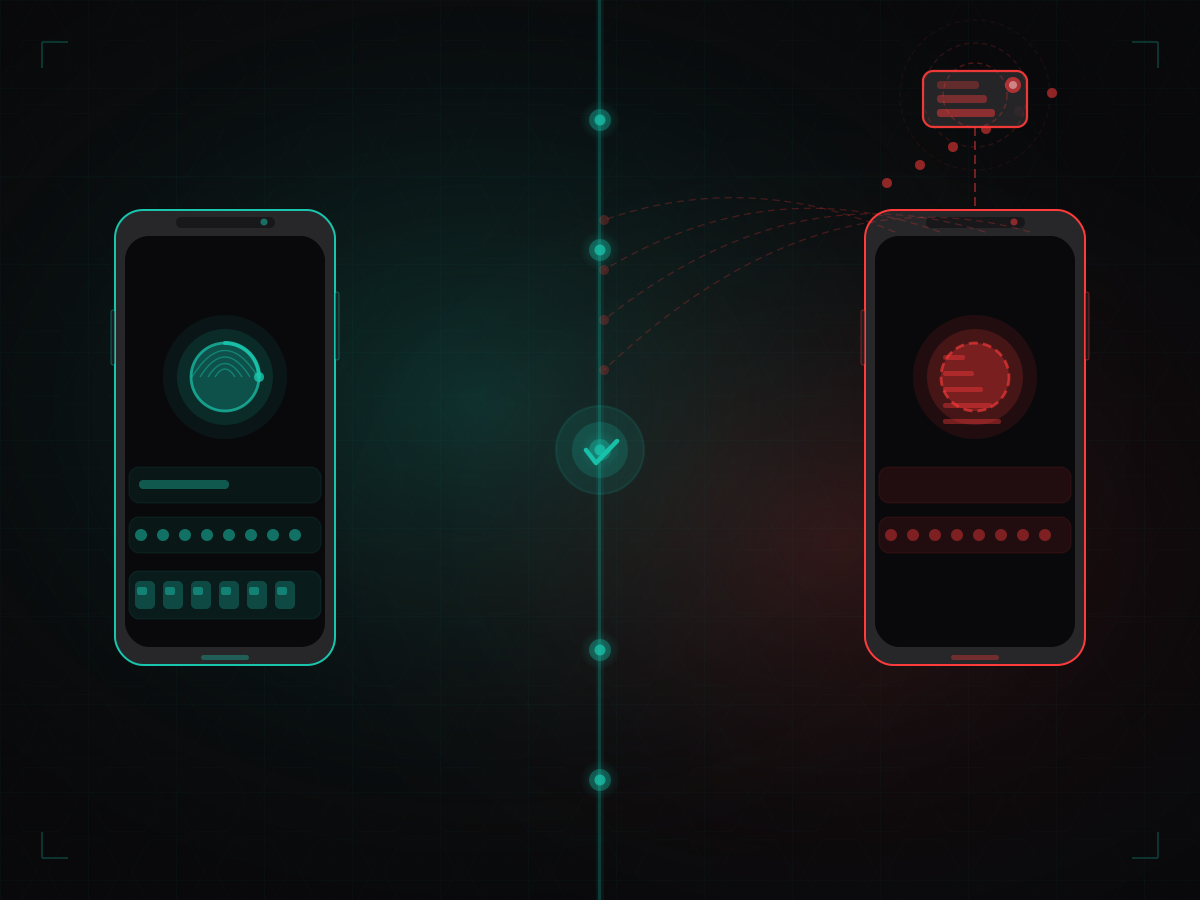
Defense Across the Full Credential Theft Attack Chain
Effective defense against credential theft requires visibility across identity, mobile, and telecom layers, not just a single point of control.
High-Volume Threat Vector
Industry data confirms that mobile phishing is the fastest-growing category of enterprise credential theft and the single largest entry vector.
Defense Across Layers
iVerify's approach is engineered to cover the combined sequence of social engineering, identity compromise, and device exploitation.
SIM Swap Detection
iVerify provides visibility into carrier-level and identity-layer threats necessary to detect and mitigate MFA bypass risk before an account takeover occurs.
Built for Teams Defending Against Credential Theft
iVerify's Mobile EDR solution is designed for organizations where identity security and access to critical systems are primary concerns.
Organizations with High-Value Identity Targets
Employees with access to payment systems, SaaS platforms, or administrative accounts face elevated targeting from credential theft campaigns.
Organizations Relying on MFAs
Teams that have implemented strong MFA policies face bypass techniques like SIM swap and malware-driven token theft that MFA alone does not address.
Enterprises with High BYOD Usage
Enterprises where employees use personal devices for work and communication carry a wide and largely unmanaged social engineering attack surface.
Security Operations Centers (SOCs)
Teams looking to integrate mobile-specific identity threat telemetry (smishing and SIM swap alerts) into existing investigation and response workflows.

Built for Teams Defending Against Credential Theft
iVerify's Mobile EDR solution is designed for organizations where identity security and access to critical systems are primary concerns.
Organizations with High-Value Identity Targets
Employees with access to payment systems, SaaS platforms, or administrative accounts face elevated targeting from credential theft campaigns.
Organizations Relying on MFAs
Teams that have implemented strong MFA policies face bypass techniques like SIM swap and malware-driven token theft that MFA alone does not address.
Enterprises with High BYOD Usage
Enterprises where employees use personal devices for work and communication carry a wide and largely unmanaged social engineering attack surface.
Security Operations Centers (SOCs)
Teams looking to integrate mobile-specific identity threat telemetry (smishing and SIM swap alerts) into existing investigation and response workflows.
Credential Theft Protection FAQs
We use strong MFA (e.g., hardware keys). Is credential theft via mobile still a major risk?
We have web-based phishing protection. Is smishing (SMS/Text Phishing) different?
Doesn’t containerization stop credential theft?
Does iVerify have to route our mobile traffic to detect malicious links?
Take control of the fastest-growing entry point for enterprise credential theft
Secure your employees' identities and protect access to your critical systems.
Request an Enterprise Free Trial
Take control of the fastest-growing entry point for enterprise credential theft
Secure your employees' identities and protect access to your critical systems.
Request an Enterprise Free Trial
Take control of the fastest-growing entry point for enterprise credential theft
Secure your employees' identities and protect access to your critical systems.
Request an Enterprise Free Trial