Secure BYOD Environments Without Sacrificing User Privacy
Achieve meaningful security visibility across your entire mobile fleet without creating employee friction or legal exposure.
Secure BYOD Environments Without Sacrificing User Privacy
Achieve meaningful security visibility across your entire mobile fleet without creating employee friction or legal exposure.
Secure BYOD Environments Without Sacrificing User Privacy
Achieve meaningful security visibility across your entire mobile fleet without creating employee friction or legal exposure.
Challenges with BYOD Programs
Securing Bring Your Own Device (BYOD) environments introduces a fundamental tradeoff between security and employee privacy. Employees resist invasive controls on personal devices, while traditional MDM-based approaches rely on deep device access that is often impractical or unacceptable in BYOD settings. The result is a visibility gap and a decision between having limited insight into real threats, implementing controls that users will not adopt, or shouldering the cost of company-owned device programs.
Solution
iVerify deploys with MDM, with MAM, or completely standalone without requiring full device management. It collects only the security telemetry needed to assess device integrity, does not monitor personal activity, and requires no invasive permissions. Security teams get threat visibility across the full BYOD fleet. Employees keep control of their personal device.
Challenges with BYOD Programs
Securing Bring Your Own Device (BYOD) environments introduces a fundamental tradeoff between security and employee privacy. Employees resist invasive controls on personal devices, while traditional MDM-based approaches rely on deep device access that is often impractical or unacceptable in BYOD settings. The result is a visibility gap and a decision between having limited insight into real threats, implementing controls that users will not adopt, or shouldering the cost of company-owned device programs.
Solution
iVerify deploys with MDM, with MAM, or completely standalone without requiring full device management. It collects only the security telemetry needed to assess device integrity, does not monitor personal activity, and requires no invasive permissions. Security teams get threat visibility across the full BYOD fleet. Employees keep control of their personal device.
The Reality
As mobile devices become central to enterprise operations, the tension between security and employee privacy has become a critical risk vector that's often overlooked.
Resistance to Surveillance
Employees will not grant full device access on personal phones. The result is shadow IT and under-secured devices with active access to corporate systems.
Exploits Persist on Return
A device compromised while traveling often retains persistence mechanisms that continue to pose a threat even after the employee returns to the corporate network.
The Legal Imperative
Growing privacy regulations around the world mean organizations must be careful about how they collect and monitor data on employee devices. Over-instrumentation creates its own liability.
The Uninstrumented Fleet
Unmanaged devices carry corporate credentials and MFA apps but generate no security telemetry. The security team has no visibility, no alerts, and no signal when one of those devices is compromised.
The Reality
As mobile devices become central to enterprise operations, the tension between security and employee privacy has become a critical risk vector that's often overlooked.
Resistance to Surveillance
Employees will not grant full device access on personal phones. The result is shadow IT and under-secured devices with active access to corporate systems.
The Legal Imperative
Growing privacy regulations around the world mean organizations must be careful about how they collect and monitor data on employee devices. Over-instrumentation creates its own liability.
The Uninstrumented Fleet
Unmanaged devices carry corporate credentials and MFA apps but generate no security telemetry. The security team has no visibility, no alerts, and no signal when one of those devices is compromised.
Attacks Target Access, Not Ownership
Modern mobile threats are defined by access, not device ownership or management status. Exploits, credential theft, and session hijacking target the mobile device as an access point into enterprise systems, regardless of whether it is corporate-owned or personal.
Where Existing BYOD Security Approaches Fall Short
Most mobile security approaches fail in BYOD environments because they assume a level of control that employees will not accept on their personal devices.
MDM & UEM
Designed for full policy enforcement and configuration control, including data wiping and device-wide visibility, on company-owned devices.
Not for achieving security visibility on personal devices without invasive monitoring. Full MDM enrollment on BYOD typically results in low adoption and employee friction.
Mobile Threat Defense
Designed for application scanning and network protection.
Not for deep OS-level integrity checks. Signature-based detection misses threats that operate below the application layer, where exploitation occurs.
Containers
Designed for isolating corporate applications and data within an application boundary.
Not for assessing the security of the underlying operating system. If the OS is compromised, the attacker gains access to core device capabilities regardless of the container.
Where Existing BYOD Security Approaches Fall Short
Most mobile security approaches fail in BYOD environments because they assume a level of control that employees will not accept on their personal devices.
MDM & UEM
Designed for full policy enforcement and configuration control, including data wiping and device-wide visibility, on company-owned devices.
Not for achieving security visibility on personal devices without invasive monitoring. Full MDM enrollment on BYOD typically results in low adoption and employee friction.
Mobile Threat Defense
Designed for application scanning and network protection.
Not for deep OS-level integrity checks. Signature-based detection misses threats that operate below the application layer, where exploitation occurs.
Containers
Designed for isolating corporate applications and data within an application boundary.
Not for assessing the security of the underlying operating system. If the OS is compromised, the attacker gains access to core device capabilities regardless of the container.
The iVerify Approach
iVerify is a Mobile EDR that decouples security visibility from device management and invasive data collection. We enable meaningful security without compromising trust.
Detecting Real Device Compromise
iVerify focuses strictly on OS-level integrity and threat telemetry, such as behavioral anomalies and indicators of compromise. This provides security teams with the data they need to assess risk without collecting PII.
Flexible, Privacy-First Deployment
iVerify's agent deploys with MDM, with MAM, or entirely standalone. Full device management is not required to gain critical security visibility.
Supporting BYOD Without Privacy Tradeoffs
Our privacy-first design restricts data collection to what is necessary for security assessment. The focus is on the state of the system, not the user's personal activity.
The iVerify Approach
iVerify is a Mobile EDR that decouples security visibility from device management and invasive data collection. We enable meaningful security without compromising trust.
Detecting Real Device Compromise
iVerify focuses strictly on OS-level integrity and threat telemetry, such as behavioral anomalies and indicators of compromise. This provides security teams with the data they need to assess risk without collecting PII.
Supporting BYOD Without Privacy Tradeoffs
Our privacy-first design restricts data collection to what is necessary for security assessment. The focus is on the state of the system, not the user's personal activity.
Flexible, Privacy-First Deployment
iVerify's agent deploys with MDM, with MAM, or entirely standalone. Full device management is not required to gain critical security visibility.
The iVerify Approach
iVerify is a Mobile EDR that decouples security visibility from device management and invasive data collection. We enable meaningful security without compromising trust.
Detecting Real Device Compromise
iVerify focuses strictly on OS-level integrity and threat telemetry, such as behavioral anomalies and indicators of compromise. This provides security teams with the data they need to assess risk without collecting PII.
Flexible, Privacy-First Deployment
iVerify's agent deploys with MDM, with MAM, or entirely standalone. Full device management is not required to gain critical security visibility.
Supporting BYOD Without Privacy Tradeoffs
Our privacy-first design restricts data collection to what is necessary for security assessment. The focus is on the state of the system, not the user's personal activity.
How iVerify Secures BYOD
iVerify extends EDR-level protection to your BYOD environment while maintaining a minimal and privacy-respecting footprint.
Deployment
The lightweight Mobile EDR agent deploys fleet-wide across iOS and Android. It requires minimal user action and can operate entirely without requiring full device enrollment or intrusive permissions.
Detection
iVerify continuously assesses system integrity and collects OS log and artifact data, providing high-fidelity threat telemetry. This enables detection of exploitation and behavioral threats without tracking user location or personal activity.
Response
Device risk signals flow directly into your identity management system (e.g., Okta or Entra ID), allowing you to enforce conditional access and restrict access to sensitive systems if a personal device is determined to be compromised.

How iVerify Secures BYOD
iVerify extends EDR-level protection to your BYOD environment while maintaining a minimal and privacy-respecting footprint.
Deployment
The lightweight Mobile EDR agent deploys fleet-wide across iOS and Android. It requires minimal user action and can operate entirely without requiring full device enrollment or intrusive permissions.
Detection
iVerify continuously assesses system integrity and collects OS log and artifact data, providing high-fidelity threat telemetry. This enables detection of exploitation and behavioral threats without tracking user location or personal activity.
Response
Device risk signals flow directly into your identity management system (e.g., Okta or Entra ID), allowing you to enforce conditional access and restrict access to sensitive systems if a personal device is determined to be compromised.
What This Means for Businesses
Securing BYOD through a privacy-centric approach delivers significant business and operational advantages.
BYOD Enablement
Allows the organization to fully embrace BYOD productivity benefits while reducing the security gaps and administrative overhead associated with unmanaged endpoints.
Risk Reduction
Closes the visibility gap created by unmanaged devices accessing critical corporate systems, reducing the risk of breaches originating from compromised personal phones.
Mitigated Legal Exposure
Restricts data collection to what is necessary for security, supporting alignment with global privacy standards and reducing regulatory risk associated with monitoring employee personal devices.
Reduced Employee Friction
Higher adoption rates follow when employees trust that the security tool on their personal device is not monitoring their personal activity.

What This Means for Businesses
Securing BYOD through a privacy-centric approach delivers significant business and operational advantages.
BYOD Enablement
Allows the organization to fully embrace BYOD productivity benefits while reducing the security gaps and administrative overhead associated with unmanaged endpoints.
Risk Reduction
Closes the visibility gap created by unmanaged devices accessing critical corporate systems, reducing the risk of breaches originating from compromised personal phones.
Mitigated Legal Exposure
Restricts data collection to what is necessary for security, supporting alignment with global privacy standards and reducing regulatory risk associated with monitoring employee personal devices.
Reduced Employee Friction
Higher adoption rates follow when employees trust that the security tool on their personal device is not monitoring their personal activity.
Built for Privacy. Proven for Security.
Achieving security and privacy simultaneously requires a validated approach to data minimization and threat detection.
Privacy-First Design
iVerify's core architecture dictates that the platform collects no unnecessary data, focusing strictly on threat telemetry and device integrity signals.
Flexible Deployment
iVerify deploys standalone, with MAM, or with MDM. Full device management is not required to gain security visibility across a BYOD fleet.
OS-Level Visibility
Operating System-level telemetry produces high-fidelity, evidence-based detection. It does not rely on user-facing signals, which are easier to spoof and less reliable indicators of compromise.
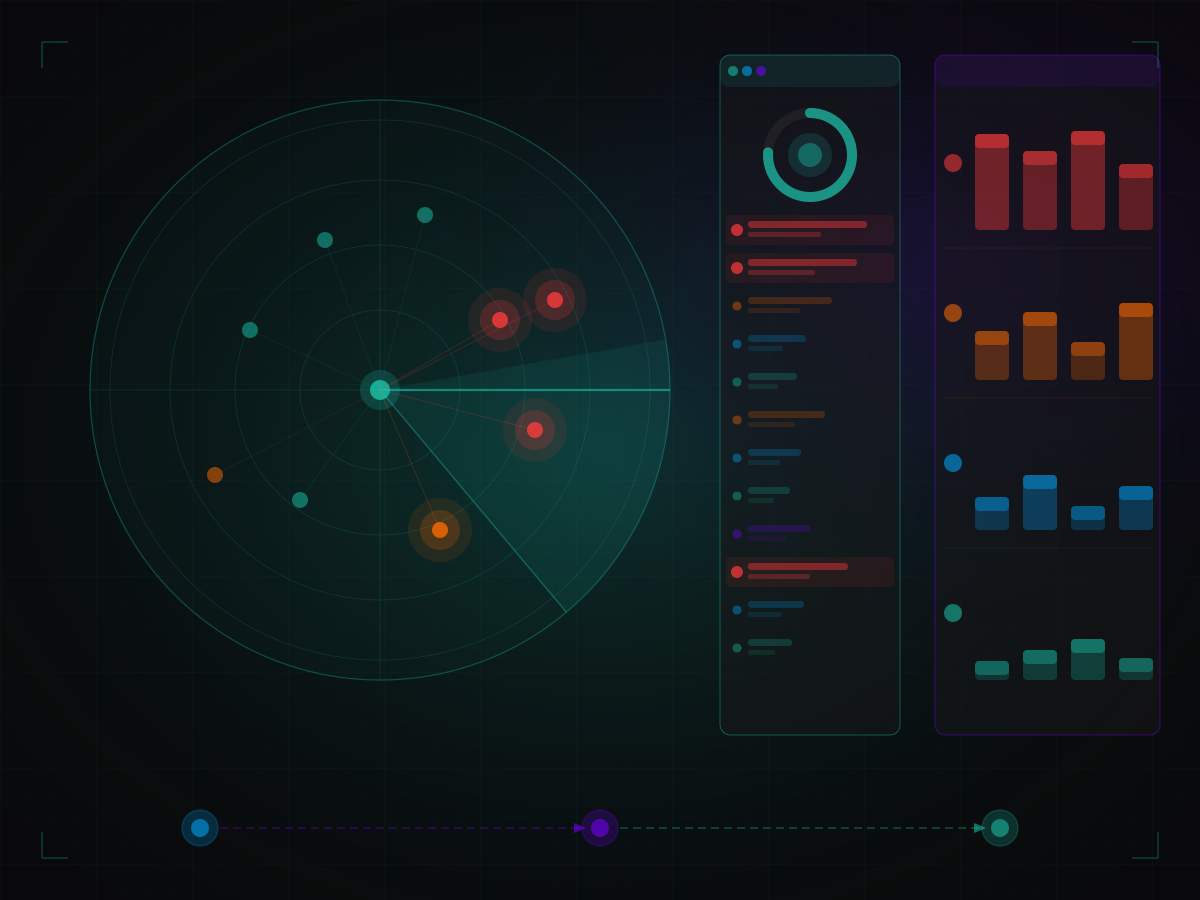
Built for Privacy. Proven for Security.
Achieving security and privacy simultaneously requires a validated approach to data minimization and threat detection.
Privacy-First Design
iVerify's core architecture dictates that the platform collects no unnecessary data, focusing strictly on threat telemetry and device integrity signals.
Flexible Deployment
iVerify deploys standalone, with MAM, or with MDM. Full device management is not required to gain security visibility across a BYOD fleet.
OS-Level Visibility
Operating System-level telemetry produces high-fidelity, evidence-based detection. It does not rely on user-facing signals, which are easier to spoof and less reliable indicators of compromise.
Built for Teams Facing BYOD Security Tradeoffs
iVerify's MEDR solution is designed for organizations that rely on BYOD, but cannot accept the visibility gaps or privacy risks that come with traditional controls.
Organizations with High BYOD Adoption
Businesses where a significant portion of the workforce uses personal devices to access corporate email, cloud applications, and sensitive resources.
Teams Subject to Strict Privacy Laws
Organizations operating under privacy regulations such as GDPR or CCPA that restrict how employee personal devices can be monitored.
Security Teams Seeking Zero Trust Maturity
Teams enforcing conditional access that need continuous visibility into the security posture of unmanaged mobile endpoints before granting access to critical systems.
Enterprises with Low Security Tool Adoption
Organizations where employees have pushed back on or avoided security tools perceived as monitoring their personal activity.

Built for Teams Facing BYOD Security Tradeoffs
iVerify's MEDR solution is designed for organizations that rely on BYOD, but cannot accept the visibility gaps or privacy risks that come with traditional controls.
Organizations with High BYOD Adoption
Businesses where a significant portion of the workforce uses personal devices to access corporate email, cloud applications, and sensitive resources.
Teams Subject to Strict Privacy Laws
Organizations operating under privacy regulations such as GDPR or CCPA that restrict how employee personal devices can be monitored.
Security Teams Seeking Zero Trust Maturity
Teams enforcing conditional access that need continuous visibility into the security posture of unmanaged mobile endpoints before granting access to critical systems.
Enterprises with Low Security Tool Adoption
Organizations where employees have pushed back on or avoided security tools perceived as monitoring their personal activity.
BYOD Security FAQs
What data does iVerify collect on a personal device to ensure privacy is maintained?
If we don’t use MDM, how do you deploy and manage the security agent?
If an employee leaves the company, can iVerify wipe their personal device?
We already have an EDR solution for laptops. Can iVerify integrate with it?
Secure your BYOD fleet without compromising employee privacy or expanding legal risk.
Gain real visibility into mobile threats to protect your data across all access points.
Request an Enterprise Free Trial
Secure your BYOD fleet without compromising employee privacy or expanding legal risk.
Gain real visibility into mobile threats to protect your data across all access points.
Request an Enterprise Free Trial
Secure your BYOD fleet without compromising employee privacy or expanding legal risk.
Gain real visibility into mobile threats to protect your data across all access points.
Request an Enterprise Free Trial