Blog
iVerify Named the Only Mobile Security Company in OpenAI's Trusted Access for Cyber Program's Inaugural Group

Rocky
Cole
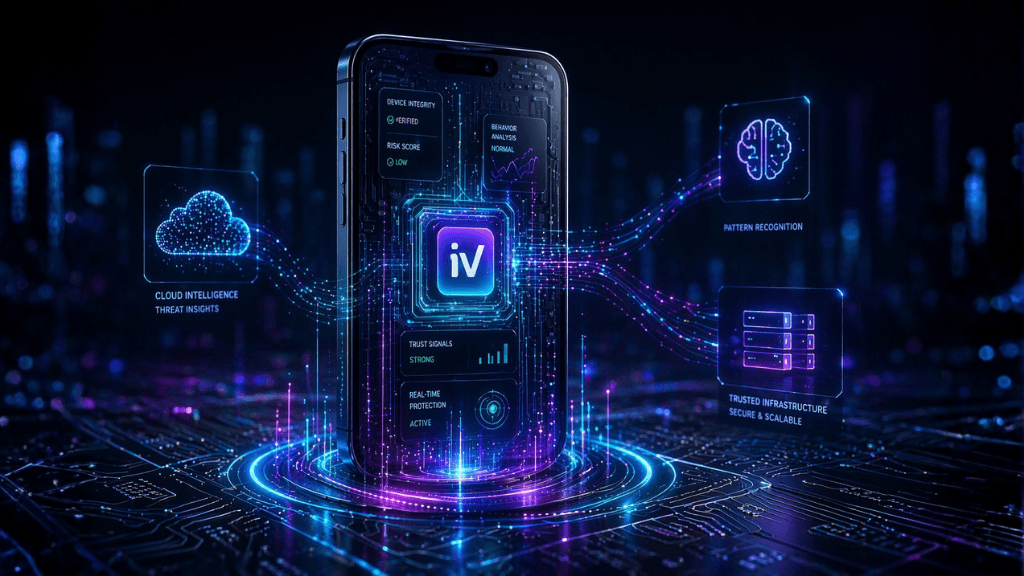
The mobile security landscape just shifted on its axis. For years, the "walled gardens" of iOS and Android provided a sense of security, leading many organizations to rely on a single, reactive strategy: patching. But in 2026, that strategy is hitting a wall.
The Death of the "Expensive" Exploit
The rise of AI-driven vulnerability discovery has fundamentally changed the economics of iOS exploitation. In the past, developing a zero-day exploit for iOS or Android required months of highly specialized manual research and millions of dollars in capital. Today, AI models, including the recently released GPT-5.4-Cyber, can analyze codebases, identify memory corruptions, and chain vulnerabilities in a fraction of the time.
The result? What once required millions of dollars can now be simulated for a few thousand dollars in compute time. This "democratization" of exploitation means the volume of threats is about to explode as the barrier to entry collapses.
Moving Beyond the Patch
If an adversary can find and weaponize a bug faster than a human team can write, test, and deploy a patch, then patching alone is a failing strategy. Organizations must move toward a defense-in-depth posture. In the mobile world, this means adopting Mobile Endpoint Detection and Response (EDR). You can't just hope the door is locked; you need sensors inside the house to detect an intruder who found a way through the window.
“Patching alone is no longer a sufficient defense against AI-enabled adversaries. To provide essential defense-in-depth, iVerify is integrating OpenAI’s Trusted Access to Codex with our elite mobile R&D team to conduct continuous, large-scale vulnerability discovery on Android and iOS. This initiative allows us to harden our EDR detections, ensuring that our proactive defense remains superior to offensive tactics even when new exploits emerge.” - Rocky Cole, COO & co-founder.
Defending at AI Speed: Our Partnership with OpenAI
To defeat AI-driven threats, defenses must move at AI speed. Visibility is the only thing that buys you time. We are thrilled to announce that we are the only mobile security EDR platform included in OpenAI’s Trust Access for Cyber (TAC) program.
This partnership gives us early, high-scale access to the world’s most advanced reasoning models. We aren't just using this for better chat support; we are integrating AI into the very core of our threat hunting:
Continuous AI Fuzzing: We are using OpenAI’s models to continuously "fuzz" (stress-test) iOS and Android kernels to find vulnerabilities before the bad actors do.
Automated POC Generation: We go a step further by using AI to turn those discovered vulnerabilities into working Proof of Concepts (POCs).
Continuous Pentesting: We use these AI-generated POCs to relentlessly pentest our own EDR platform. By attacking ourselves with the same tools the adversary uses, we ensure our detection logic stays months ahead of the curve.
Our Commitment to the Ecosystem
While we use these discoveries to harden our EDR and protect our customers, we remain committed to the security of the broader mobile ecosystem. Following responsible disclosure protocols, we report all discovered vulnerabilities to Apple and Google immediately to ensure they are patched for everyone.
The era of "set it and forget it" mobile security is over. The AI arms race is here, and with our new OpenAI partnership, we’re ensuring defenders move faster than the threat.
To learn more about how iVerify can protect your enterprise mobile fleet, book an introductory call today.


Subscribe to our blog to receive the latest research and industry trends delivered straight to your inbox. Our blog content covers sophisticated mobile threats, unpatched vulnerabilities, smishing, and the latest industry news to keep you informed and secure.